C3: Roles &
permissions
A deep dive into how I redesigned the access architecture of C3, eliminating a separate admin system, building a scalable permissions framework, and connecting role logic to every layer of the product.
Year
2024
Role
Senior Product Designer
Scope
Product Strategy, UI/UX, Prototyping, Design system
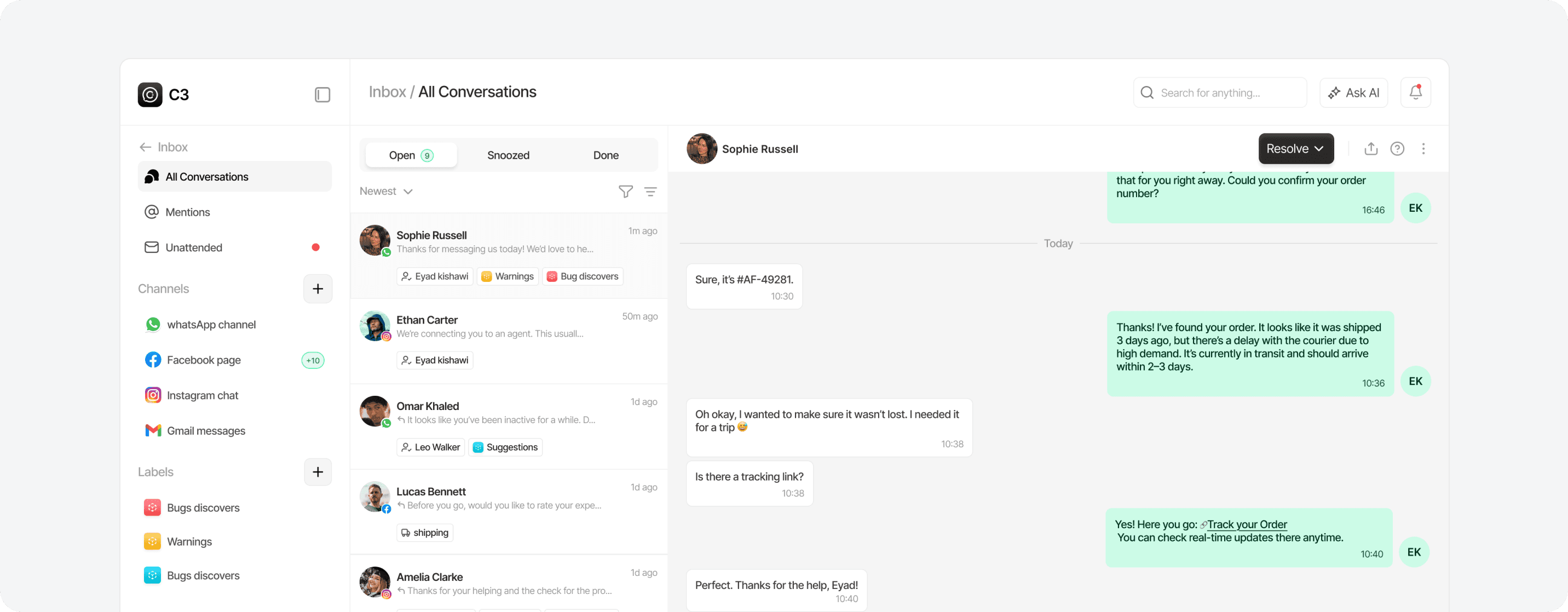
context
C3 is a B2B omni-channel platform where support and sales teams manage customer conversations across WhatsApp, Messenger, Instagram, and Email from one unified inbox.
Three user types. Two separate systems. No defined rules for who could do what.
Problem
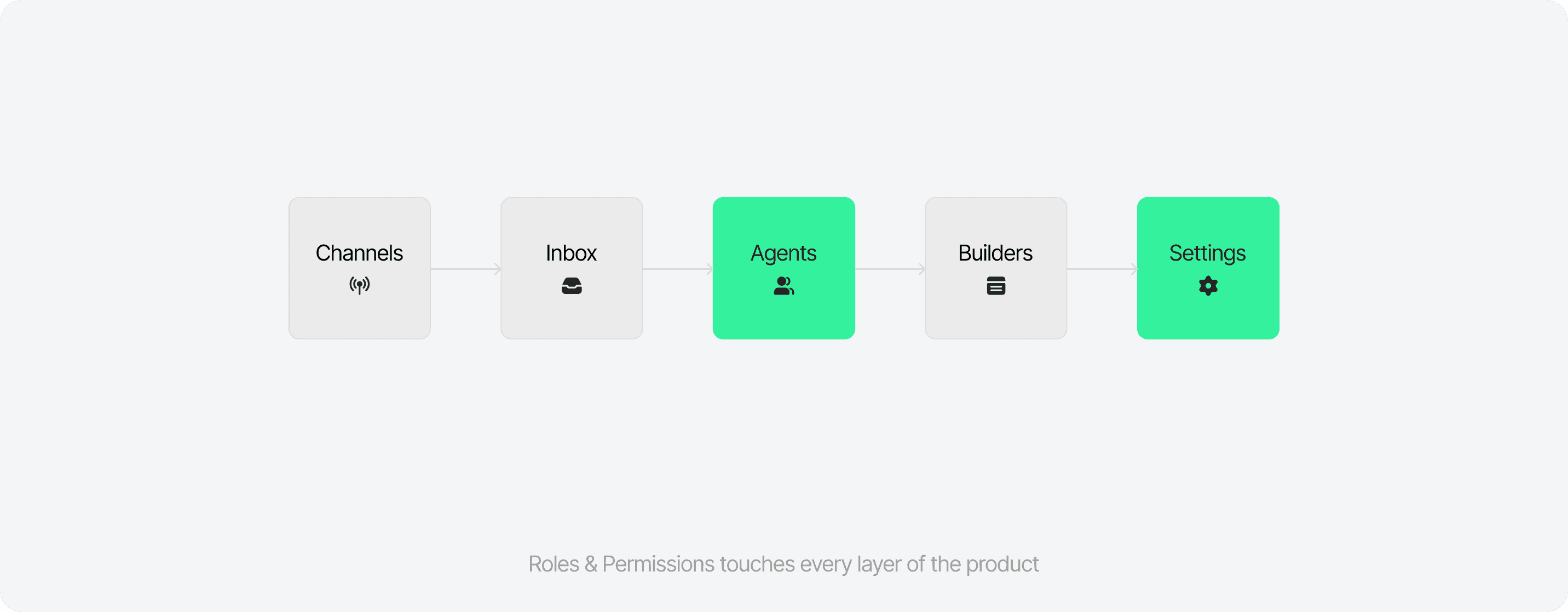
Two dashboards. Three roles. Zero logic.
The Superadmin operated from a fully separate login interface, disconnected from the main product entirely. Inside the main dashboard, Admins and Agents had almost identical access. There was no system connecting what a role meant to what a user could actually see, do, or control.
The result: agents accessed settings they had no reason to touch.
Admins had no structured way to control who replied from which channel. And the Superadmin had no visibility into live operations because they were locked in a separate system.
Investigation
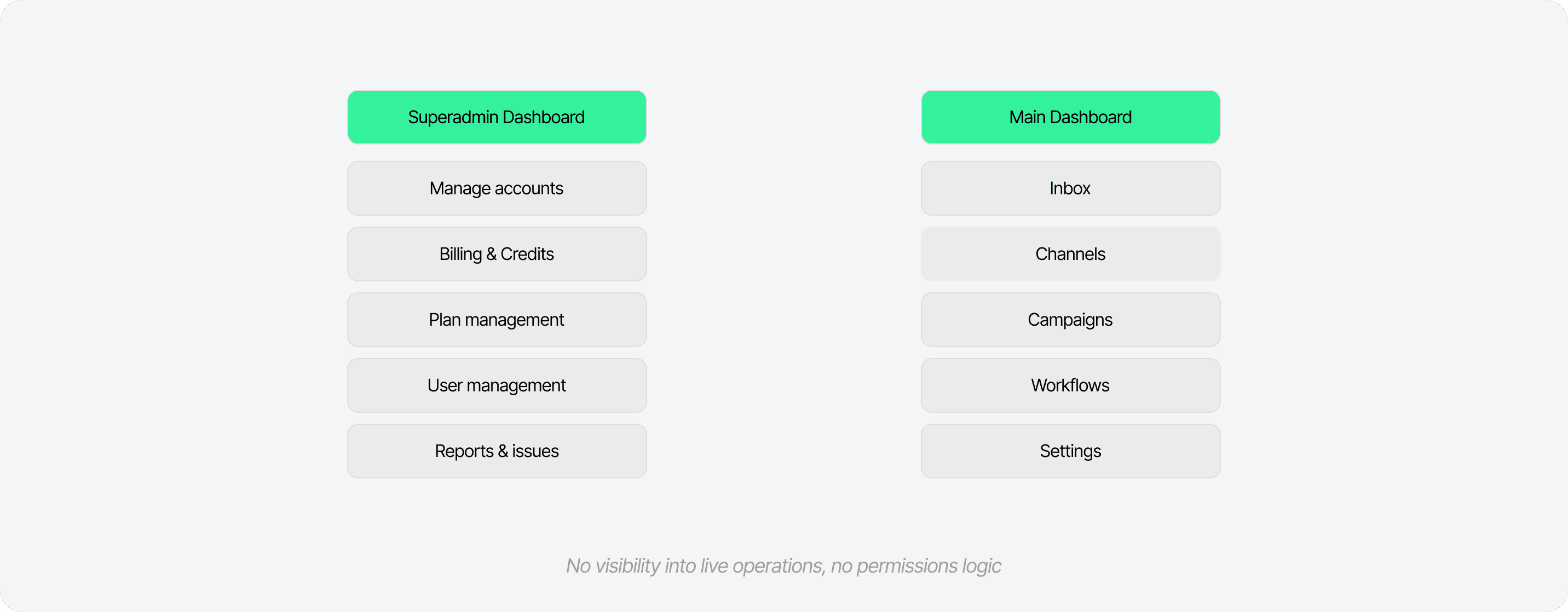
Before redesigning anything, I needed to understand how roles, access, and responsibilities were actually working across C3 and where the gaps were creating friction. I broke the problem down from three angles: the existing product, the people managing it, and how comparable platforms solved it.
Stakeholder & Developer Interviews
I spoke with stakeholders and developers to understand the real-world impact. Three consistent themes came up: Admins were managing agents manually with no structured permission controls. Developers were hard-coding access rules because no design system existed for it. Bringing a new agent onboard meant a full manual briefing on what to avoid touching.
Step 2
Add your second investigation step content here.
Product Audit
I started by auditing C3 myself navigating every section as each user type, documenting what was accessible, what was blocked, and what should have been blocked but wasn't. The audit revealed the full scope of the problem: it wasn't one broken feature, it was a missing layer across the entire product.
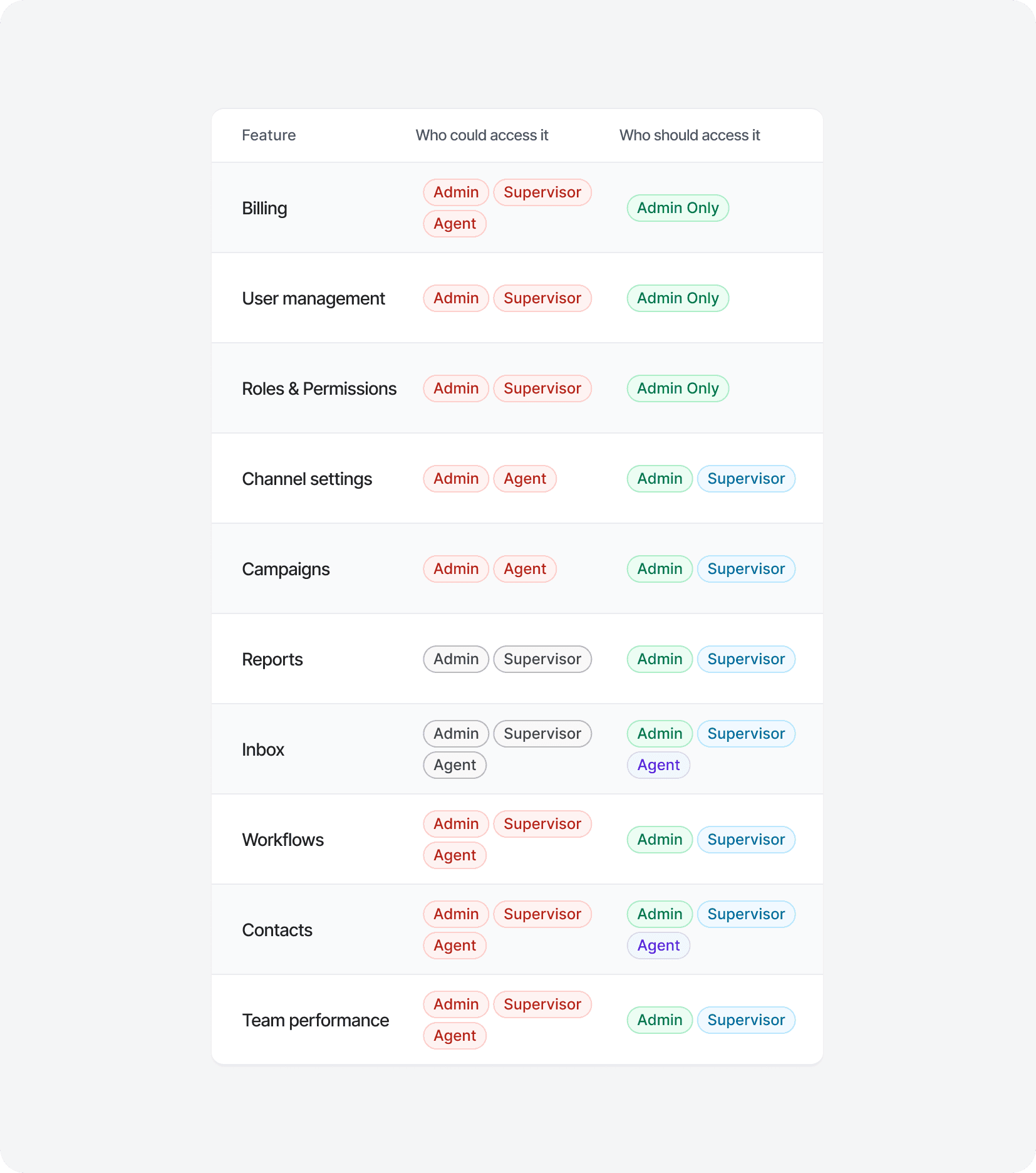
Designing one system, clear permissions, and defined roles.
Text 3
C3 is a B2B omni-channel platform where support and sales teams manage customer conversations across WhatsApp, Messenger, Instagram, and Email from one unified inbox. Three user types. Two separate systems. No defined rules for who could do what.
Text 3
C3 is a B2B omni-channel platform where support and sales teams manage customer conversations across WhatsApp, Messenger, Instagram, and Email from one unified inbox. Three user types. Two separate systems. No defined rules for who could do what.
Any thingxt
C3 is a B2B omni-channel platform where support and sales teams manage customer conversations across WhatsApp, Messenger, Instagram, and Email from one unified inbox. Three user types. Two separate systems. No defined rules for who could do what.
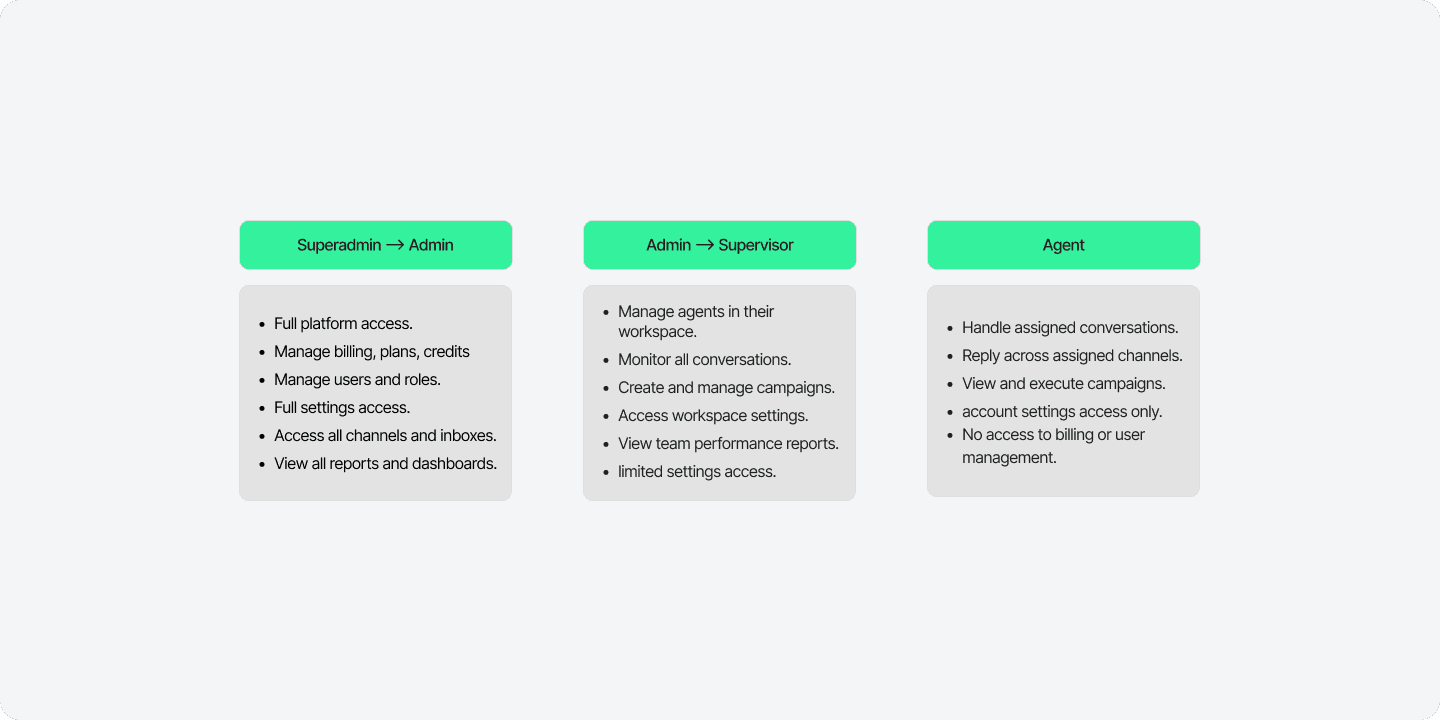
Three roles. Zero overlap
Before designing any screen, the three roles were mapped out and renamed to better reflect function, Superadmin became Admin, Admin became Supervisor, and Agent stayed Agent.
IMPACT
1 system eliminated, Superadmin dashboard fully deprecated.
3 roles redesigned with clear ownership and named functions.
6 feature areas covered by the permissions matrix.
56% reduction in misdirected settings access during internal testing.
3× faster role setup compared to previous manual process.
~40% reduction in new agent onboarding time.
100% of feature actions now governed by role-based permissions.
Reflection
The hardest problems have no UI surface. You have to map the system to find them — always audit before you design.
Naming is design. Renaming Superadmin → Admin, Admin → Supervisor changed how every stakeholder understood the system.
A permissions matrix is only as good as its UI response. The matrix was 40% of the work. The other 60% was every disabled button, hidden tab, and redirect state.